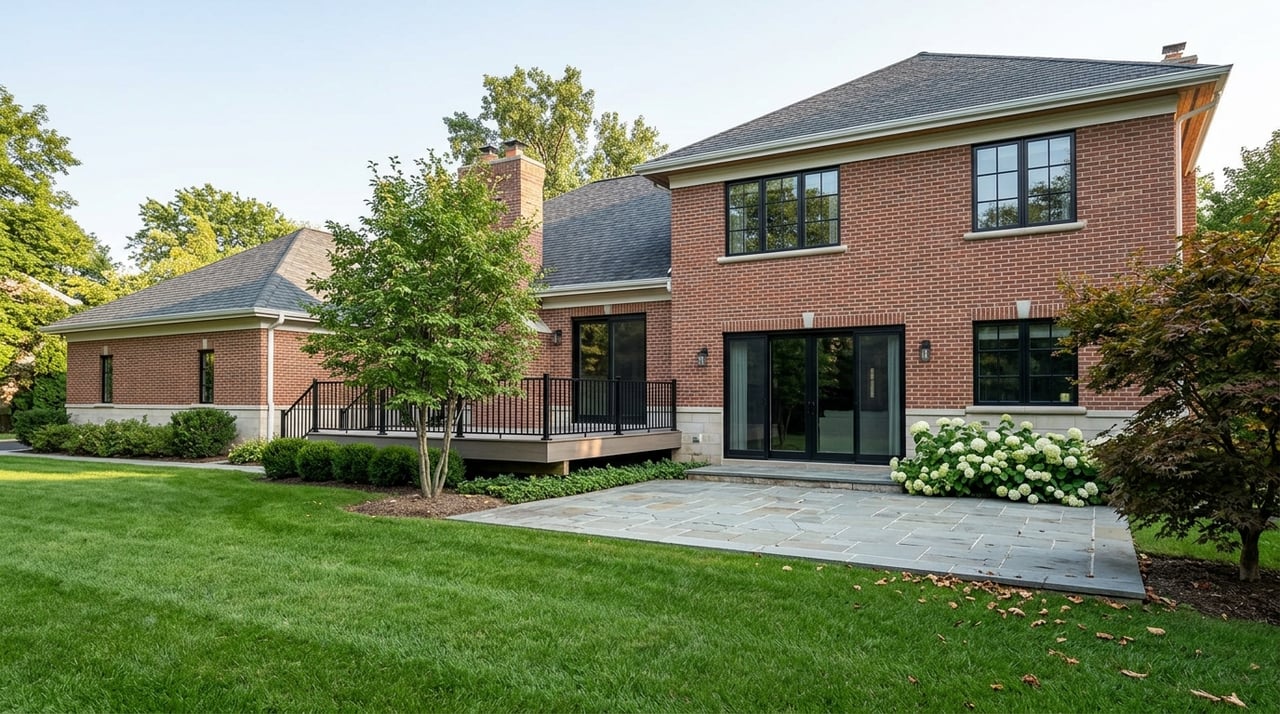
Wondering whether a ranch or split-level makes more sense in Manhasset Hills? It is a smart question, especially in a neighborhood where many homes were built in the 1950s and 1960s and both layouts still show up in today’s inventory. If you are trying to balance daily comfort, future renovation plans, and long-term resale appeal, the right choice often comes down to how you want to live in the home. Let’s dive in.
Why This Choice Matters in Manhasset Hills
Manhasset Hills is largely a detached single-family home market, with 1,216 housing units and about 97.9% of them detached homes. The median construction year is 1963, and more than half of homes were built in the 1960s, with another 28.2% built in the 1950s. That mid-century history helps explain why ranch and split-level homes are such a common comparison here.
Current inventory also supports that local reality. Recent style-filtered searches showed both ranch and split-level homes available in the area, even though the overall number of listings was small. In a market with roughly 12 to 14 homes for sale, median listing prices around $1.53 million to $1.57 million, and about 67 days on market, layout fit can matter just as much as price or bedroom count.
Ranch vs Split-Level Basics
What a Ranch Home Offers
A ranch home is typically a single-story layout with the main living areas and bedrooms on one primary level. These homes often have a more open central living space, with bedrooms grouped off to one side and an attached garage or carport built into the footprint.
In practical terms, a ranch tends to feel straightforward and easy to navigate. You usually get fewer stairs, smoother furniture movement, and a more unified day-to-day living pattern. For many buyers, that simplicity is the biggest advantage.
What a Split-Level Home Offers
A split-level home uses three or more staggered levels connected by short staircases. Instead of one main floor or two full stories, you move between levels that each serve different functions, such as living space, bedrooms, a den, or guest space.
That design creates more separation between household zones without necessarily needing a larger footprint. The tradeoff is that you will use stairs more often, and the home’s layout can feel more segmented from room to room.
How To Decide Based on Daily Life
Choose a Ranch for Fewer Stairs
If you want easier day-to-day movement, a ranch usually has the edge. Single-level living can be helpful if you want less stair use, easier stroller movement, or a layout that feels simpler for carrying groceries, moving furniture, or handling everyday routines.
That does not make a split-level the wrong choice. It just means you should be realistic about how often you will go up and down short stair runs between the entry, living space, and bedroom areas.
Choose a Split-Level for More Separation
If your household works better with distinct zones, a split-level may fit your lifestyle better. These homes can naturally separate the main living area from bedrooms, a den, guest space, or a home office.
That separation can be especially useful if you want quieter work space, more privacy between rooms, or a layout where different parts of the home serve different purposes. In many cases, a split-level gives you that separation without expanding the home’s footprint outward.
Think About Renovation Before You Buy
Ranches Are Often Easier To Rework
If you expect to make major layout changes later, a ranch may be the more flexible option. A single-level floor plan is generally easier to open up or expand than a staggered multi-level home.
That does not mean every ranch is simple to renovate. Older homes in this style may still need plumbing, electrical, HVAC, or kitchen updates, especially in a neighborhood with so much mid-century housing stock.
Split-Levels Can Be More Complex
Split-level homes can absolutely be updated, but larger redesigns may be more complicated. Because the levels are staggered and connected by short runs of stairs, changing circulation or making structural additions can be trickier.
There are also practical update points to think through. In many split-level homes, stairs, railings, foyers, and lower-level finishes play a big role in how the house functions, so those areas may deserve extra attention during planning.
Lot and Zoning Matter Too
In Manhasset Hills, future expansion is not just about house style. It also depends on the property itself and the Town of North Hempstead requirements for additions and alterations.
The town’s residential packet requires a zoning analysis sheet, site plan with existing and proposed setbacks, construction drawings, and energy-code documentation when the thermal envelope is affected. The zoning analysis also looks at items like gross floor area, front, side, and rear setbacks, preexisting average grade, and sky exposure plane calculations.
That means a ranch is not automatically easy to expand, and a split-level is not automatically impossible to improve. The specific lot, setback pattern, and zoning district will shape what is realistic.
Don’t Judge by Style Alone
It is easy to get caught up in the label of ranch versus split-level, but that should not be your only filter. In a balanced market with limited inventory, condition and functional layout may influence your decision almost as much as the architectural category.
A well-maintained split-level with smart room separation may suit you better than a dated ranch that needs major systems work. On the other hand, a clean ranch with a strong floor plan may offer better long-term flexibility if fewer stairs and easier remodeling are high priorities for you.
A Simple Way To Make the Call
If you are torn between the two, start with how you want the home to function over the next five to ten years. Think less about the style name and more about your daily routine, future plans, and comfort with updates.
Here is a simple way to frame it:
- Choose a ranch if you want fewer daily stairs, a more unified main floor, and a layout that may be easier to reconfigure later.
- Choose a split-level if you want more separation between living zones and like the idea of distinct spaces within the existing footprint.
- In either case, pay close attention to condition, system age, and what the lot may allow if you plan to renovate.
In Manhasset Hills, neither layout is universally better. Each one solves a different buyer problem, and the best fit is the one that matches how you actually live.
If you are comparing homes in Manhasset Hills and want help sorting through layout, condition, and resale potential, Singh's Team can help you narrow the options with local insight and a practical plan.
FAQs
What is the main difference between a ranch and split-level home in Manhasset Hills?
- A ranch usually offers single-level living with a more unified main floor, while a split-level offers staggered floors with more separation between living areas.
Which home style in Manhasset Hills is better if you want fewer stairs?
- A ranch is usually the better fit if fewer daily stairs are a top priority.
Which home style in Manhasset Hills is better for separate living zones?
- A split-level is often better if you want more distinct spaces for bedrooms, a den, guest space, or a home office.
Are ranch homes in Manhasset Hills easier to renovate than split-level homes?
- In general, a ranch may be easier to rework because of its single-level layout, while split-level homes can be more complex to redesign structurally.
Do lot rules affect whether you can expand a home in Manhasset Hills?
- Yes. In the Town of North Hempstead, additions and alterations depend on zoning analysis, setbacks, site plans, construction drawings, and other property-specific requirements.
Is inventory in Manhasset Hills large enough to be picky about house style?
- Inventory has been relatively limited, so style matters, but condition, layout, and renovation needs can be just as important when you compare available homes.